
Foreign Object Debris (FOD)
Course Description
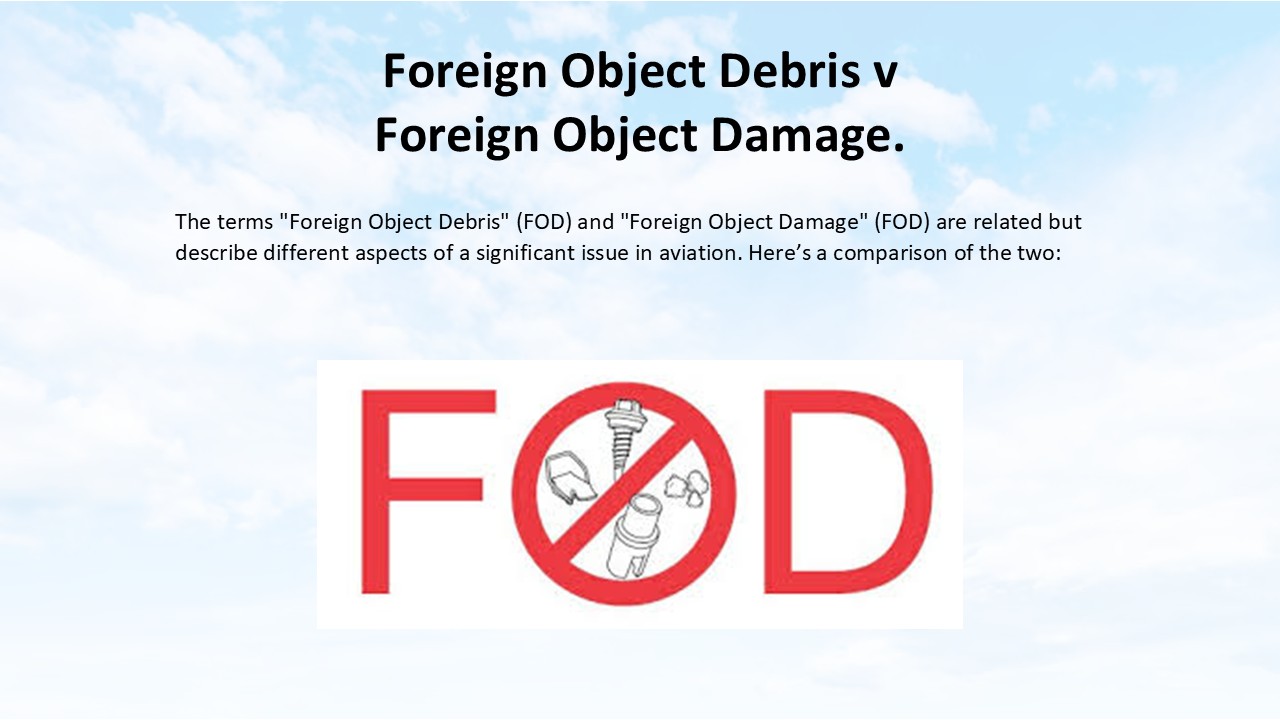
The Foreign Object Debris (FOD) Awareness Training course is designed to help maintenance personnel, ground staff, and aviation professionals understand the risks posed by FOD and how to prevent it. The course begins by clearly defining Foreign Object Debris as any loose item found in an inappropriate location within the aviation environment and Foreign Object Damage as the harm caused when that debris impacts an aircraft. Through this foundation, participants develop an appreciation of how even small items such as screws, tools, or plastic can cause catastrophic incidents when ingested into engines or when damaging structures.
The course explores the types of damage FOD can cause, ranging from dents, cracks, and corrosion of airframes to severe engine failures, hydraulic leaks, electrical malfunctions, and tire damage. Real-life case studies, such as the Concorde disaster of 2000, underline the devastating consequences of uncontrolled FOD. Participants also learn about the various types and sources of debris, including maintenance activities, operational wear, environmental factors, wildlife, and passenger-related items.
An important part of the training is devoted to understanding the threats posed by FOD, not only to aircraft but also to personnel safety and operational continuity. Delays, cancellations, costly repairs, and reputational damage are all explained as direct outcomes of failing to control debris in critical areas. By recognising these consequences, participants gain a stronger awareness of their role in preventing incidents.
The course places strong emphasis on detection and prevention strategies. Learners study inspection techniques, the importance of continuous monitoring, and the role of advanced detection technologies. They are introduced to the “clean as you go” philosophy, tool control measures, and workplace organisation practices that help reduce risks at source.
Practical preventative measures are also covered in depth. These include regular inspections, clear policies, awareness campaigns, proper waste disposal, and maintenance of ground support equipment. The role of training, cultural awareness, and interdepartmental cooperation is highlighted as essential in creating a robust FOD management system.
By the end of the course, participants will be equipped with a clear understanding of how to detect, prevent, and manage FOD. They will appreciate the impact of vigilance and teamwork in maintaining safety, ensuring compliance with regulations, and protecting both personnel and aircraft from avoidable risks.
Why Take This Course?
FOD is one of the most preventable threats in aviation, yet it remains a leading cause of costly damage and dangerous incidents. By taking this course, participants will gain the knowledge and awareness needed to prevent debris from becoming a hazard, ultimately saving lives, protecting aircraft, and avoiding unnecessary operational disruptions.
For organisations, the course provides reassurance that maintenance staff and ground personnel are properly trained in FOD prevention. This reduces the likelihood of fines, delays, and reputational damage while supporting compliance with regulatory requirements and international best practices.
Most importantly, this training fosters a culture of responsibility and vigilance. By completing it, participants not only develop practical skills but also contribute to a safer, cleaner, and more efficient working environment across airports, maintenance facilities, and airline operations.