


Safety Training including Human Factors
£50.00
Course Description
The Safety Training including Human Factors Course provides mandatory initial training for maintenance and airworthiness staff, in line with EASA Part-145 and Part-CAMO requirements. Covering regulations, human performance, teamwork, communication, and safety culture, the course explores how errors arise and how they can be prevented.
Through interactive modules and real-world case studies, participants learn to recognise human limitations, apply error management techniques, and contribute to effective Safety Management Systems. This training strengthens compliance, promotes professionalism, and enhances safety across maintenance and CAMO environments.
Associated Courses
Basic Human Factors VS Safety Training Including Human Factors
Which do You Need.
Since December 2024 Human factors has been updated by both EASA and the UK CAA.
The main difference is that now Human Factors must include Safety Training and is re-titled Safety Training Including Human Factors. (This is the course we recommend.)
But if you have a valid Safety Training certificate, then in reality you will only need the Basic Human Factors course. (But beware once the Safety Training certificate runs out, your Basic Human Factors certificate will no longer fully cover you and then you will have to complete another Safety Training Course.)
The cheapest and best option is the new Safety Training Including Human Factors.
Full Course Description
The Safety Training including Human Factors Course is designed to provide essential knowledge and awareness for all staff engaged in aircraft maintenance and continuing airworthiness management. Rooted in EASA Regulation (EU) No. 1321/2014 Part-145.A.30(e) and supported by GM1 guidance, this programme delivers the mandatory initial training in Human Factors and Safety Management for Part-145 and CAMO personnel. By addressing both regulatory compliance and practical application, the course strengthens aviation safety culture across organisations.
The course begins with an exploration of the regulatory framework, the history of human error in aviation, and the concept of Murphy’s Law. Participants will study how accidents, incidents, and near-misses often stem from preventable human errors, and how systemic safety management processes aim to identify, capture, and mitigate risks before they escalate. Through case studies such as the Tenerife disaster and more recent maintenance-related events, learners gain insight into how human error has shaped regulatory responses.
Participants will then examine the “human machine” in depth, including sensory perception, information processing, fatigue, stress, motivation, and circadian rhythms. Using models such as SHELL, learners discover how people interact with their environment, tools, procedures, and colleagues. Case studies and interactive exercises reveal how factors such as distraction, pressure, and complacency can combine to create dangerous situations, even among highly skilled professionals.
Further modules explore organisational culture, teamwork, and communication. Learners will analyse professional behaviour, the role of safety culture, and the importance of confidential reporting schemes such as CHIRP. Attention is also given to the responsibilities of CAMOs, MROs, and operators, highlighting how human factors extend beyond line maintenance into planning, oversight, and airworthiness reviews. By understanding both the individual and organisational dimensions of human factors, staff can actively contribute to safer operations.
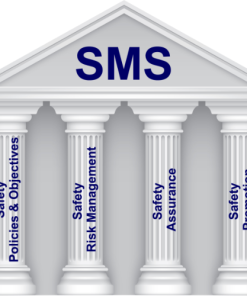
The course concludes with an introduction to Safety Management Systems (SMS) and their implementation across operators, CAMOs, and maintenance organisations. Participants will learn the core processes of hazard identification, risk assessment, compliance monitoring, and safety promotion. By the end, learners will be equipped not only to comply with regulatory training requirements but also to apply safety principles in everyday tasks, influence workplace culture, and prevent future accidents.
Related products
Initial Courses

Initial Courses
Initial Courses
Initial Courses
Initial Courses

Initial Courses

Aviation Legislation